
Family : Hylidae

Text © Dr. Luca Tringali

English translation by Mario Beltramini
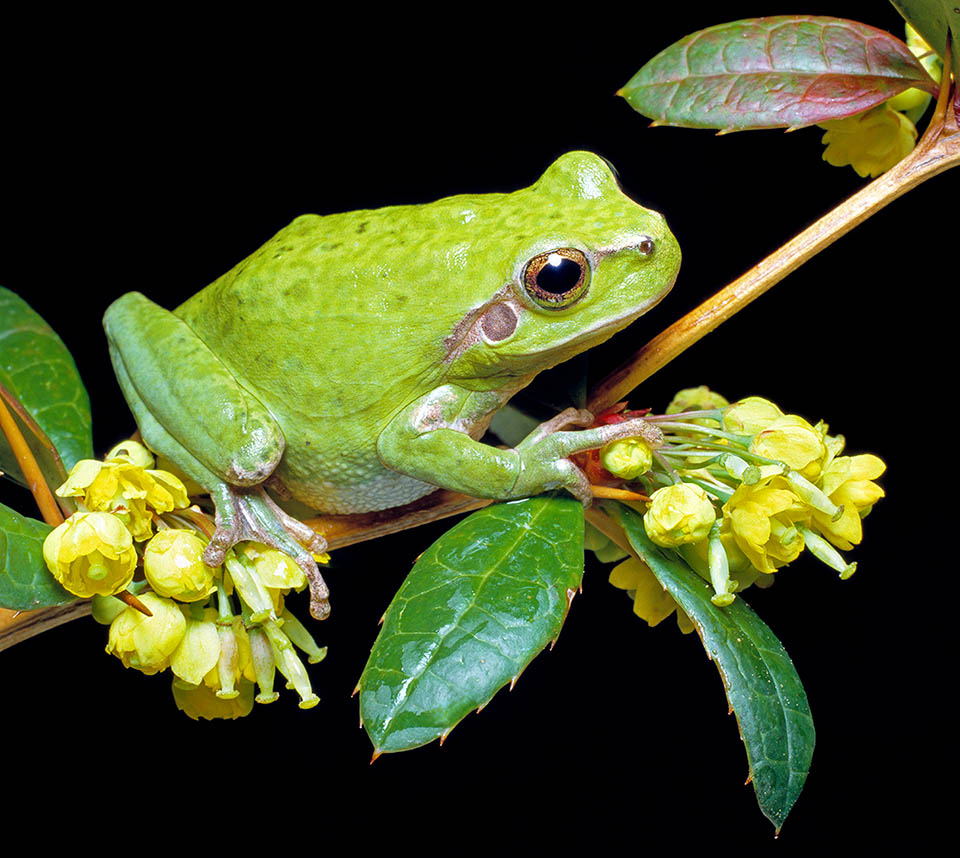
Present discontinuously along Mediterranean coasts, Hyla meridionalis circulated already in Morocco before Holocene and from here would have reached Spain naturally © Dr. Giuseppe Mazza
The Mediterranean tree frog Hyla meridionalis Boettger, 1874, is an anuran of the family Hylidae, with a non-immediate etymology at least for what concerns the generic epithet.
Many Authors derive not correctly the etymology of the genus Hyla from the old Greek “ὕλη” (hūlē), forest or wood, to indicate the arboreal behaviour of these amphibians, or from the verb “ὑλάω” (ulào), to bark, to howl, due to the characteristic call of the species of this genus.
Actually, the genus Hyla was instituted in 1768 by the Austrian zoologist of Italian origin Josephus Nicolaus Laurenti who reveals to us the origin of the generic name, that refers both to the environment and to the singing habits of the Tree frogs, connecting it to the myth of Heracles and his companion Hylas, who was kidnapped by the Naiads and dragged into a river; not finding her, Heracles instituted a ritual to remember his lost lover, during which the priests had to shout Hyla three times!
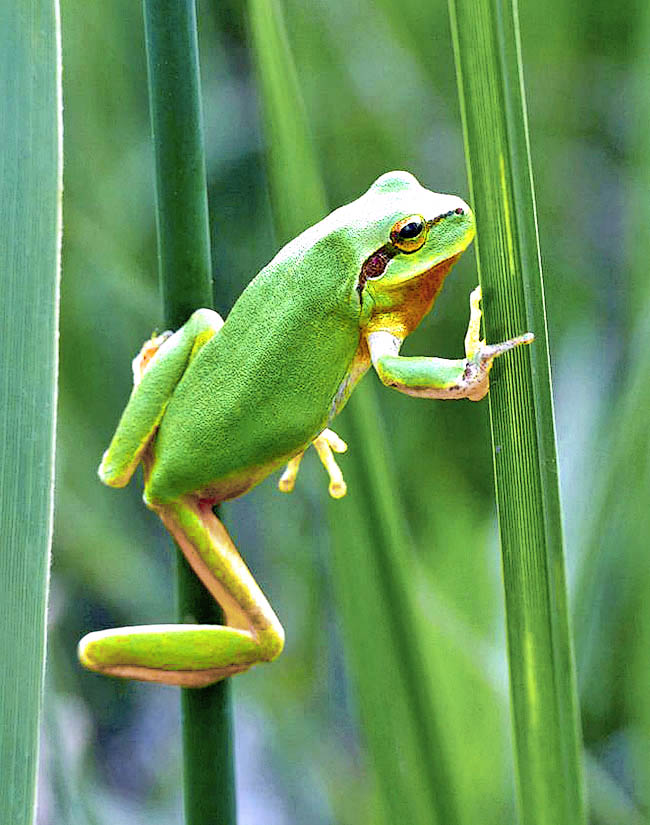
Smart climber and thermophilic, surprising jumper between the branches, lives sheltered by the vegetation, if possible not far from water, even above 1000 m in Europe and up to 2650 m in High Atlas in Morocco © vinhson
Simpler is the derivation of the specific epithet that refers to the geographical distribution of the amphibian in the southern Mediterranean basin.
The anurans of the family Hylidae, to which belong 1081 described species, are known under the common name of Tree frogs, have variable size and almost all species have characteristics adhesive pads on the fingers containing a cartilage that misaligns the terminal phalanx (intercalated phalanx).
Such conformation allows a remarkable mobility to the adhesive disc improving its functionality, especially during the climbing phases: in the English-speaking world in fact these animals are known under the name of Tree frogs (Arboreal frogs).
This family, standing among the most numerous of the order Anura, has been recently subdivided in three subfamilies.
1) Pelodryadinae,with Australian-Papuan diffusion, is represented by about 200 species, to which belongs Cyclorana platycephala, the Water-holding frog, sought after by the Australian Aborigines who “squeeze” it to collect the water stored in its bladder.
2) Phyllomedusinae, with Central-South American distribution, with about 60 species belonging to 7 genera; one well known species is Phyllomedusa bicolor that avoids dehydration with the secretion of a waxy substance having a high protective power that it carefully sprinkles all over the body.
3) Hylinae is the most numerous group, with more than 900 known species, and with the amplest geographical distribution: the entire American continent, North Africa and temperate Eurasia; peculiar exponent of this subfamily is Pseudis paradoxa whose larvae reach the remarkable size of 220 mm, whilst the adults are on average 3 or 4 smaller.
Zoogeography
The Tree frogs of the genus Hyla, the only Hylidae present in Europe and Africa, are represented by at least 38 species in central and northern America, in Europe, Asia and North Africa.
The Mediterranean tree frog is distributed, discontinuously, especially in the south-western portion of the Mediterranean Region.
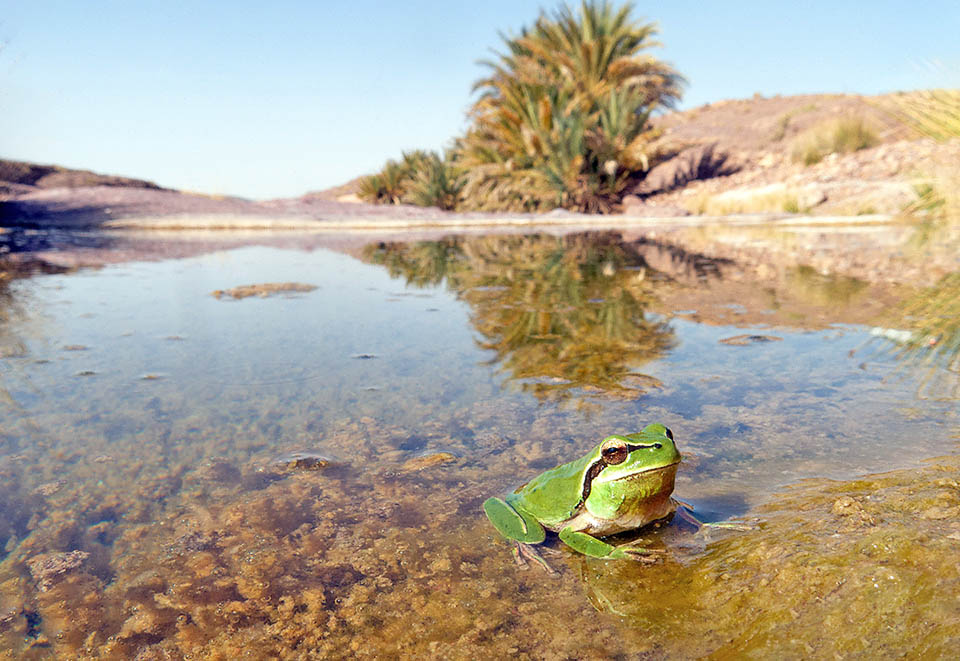
Here in a water puddle with poor Morocco vegetation. Hyla meridionalis reaches high density in suitable environments and in the driest parts of its vast range © Wouter Beukema
In North Africa it is present in Morocco and Algeria, whilst in Europe is present in Portugal and Spain (only one population in the Basque Country), in southern and western France (Landes, Gironde, Charente and Charente Maritime), in north-western Italy (Liguria and, marginally, in Piedmont), where Hyla meridionalis reaches the eastern limit of its distribution. There are also some insular populations in the Balearics and in the Canaries, where this species has been possibly introduced by man, and in Madeira. The Tunisian populations that are still now considered by many Authors as Mediterranean tree frogs, after recent research must be attributed to a new species: Hyla carthaginiensis Dufresnes et al., 2019, distributed in Tunisia and eastern Algeria.
The European distribution area of Hyla meridionalis includes two main groups of populations: southern, in southern and western Spain and Portugal; northern, from north-eastern Spain and from southern France up to north-western Italy.
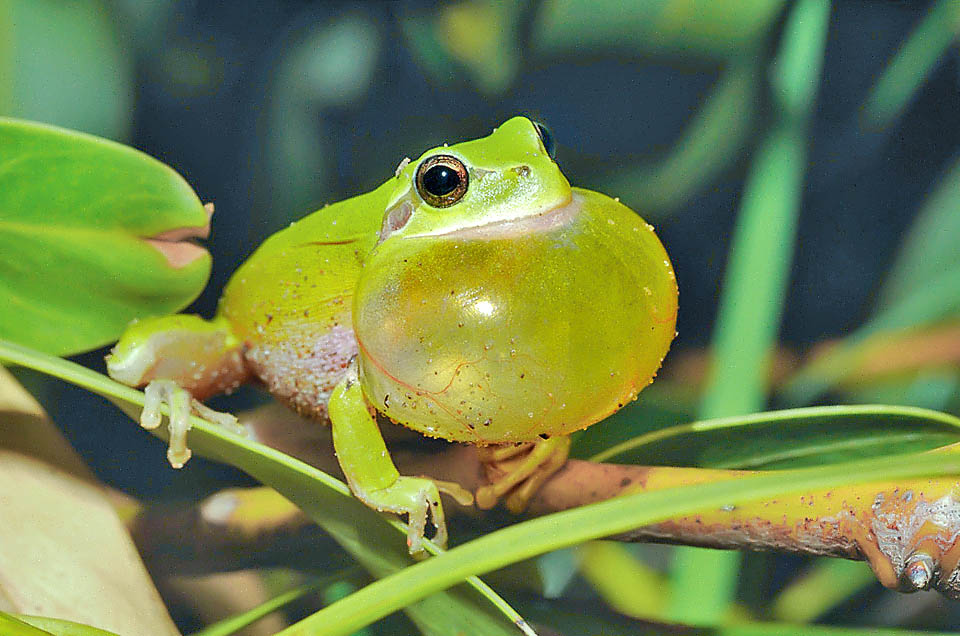
Like many anurans, social and reproductive behaviour of Mediterranean tree frog is based mainly on acoustic communication © moroccoherps
Even if there is no geographical continuity between the populations of the northern coast of Mediterranean and those of the southern coast of the Mediterranean, subspecies have not been instituted, as significant genetic differences have not been observed.
The presence of the genus Hyla in Morocco has been reported since the late Pliocene on the base of fossil remains, and it seems that all European populations of the Mediterranean tree frog come from common Moroccan ancestors, which suggests a relatively recent Holocene invasion, through natural colonization as well as if human-mediated.
As a matter of fact it would appear that the colonization of south-western Europe has occurred to a biogeographical scenario based on two possible movements of expansion.
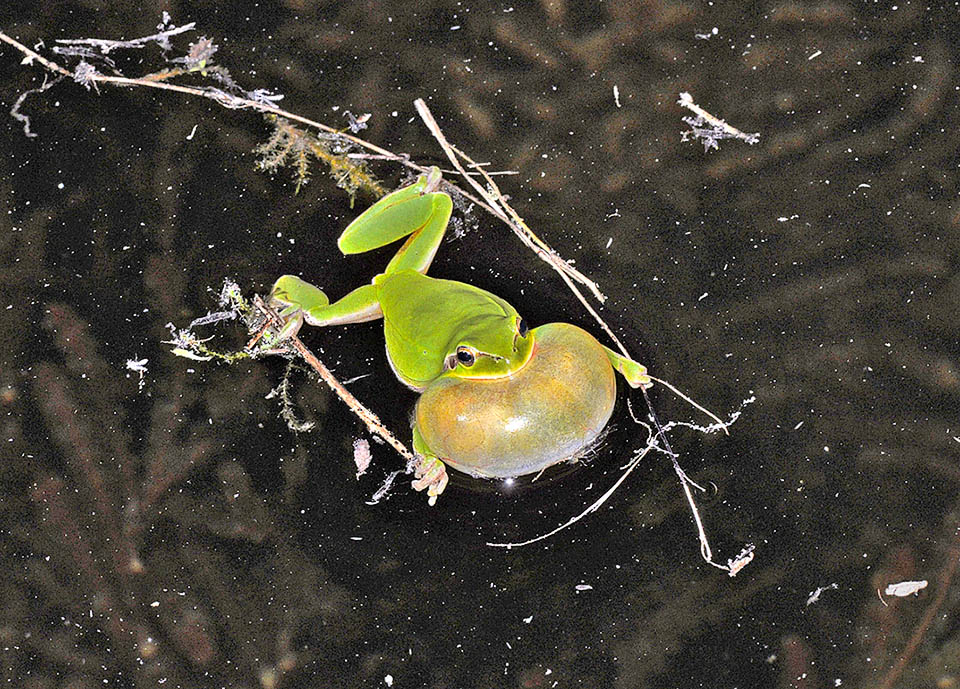
At the wedding period beginning males migrate during the night to the reproduction sites emitting in chorus their calls to attract the females. The vocal sacs can reach swelling a size equal, swelling, to half of the length of the snout-cloaca, ensuring an effective communication even if in presence of a dense vegetation © Pariset Pierre
Hyla meridionalis should have expanded naturally from Morocco, where it was amply diffused before the Holocene, to the southern Iberian Peninsula, that displayed favourable environmental conditions and where its presence could therefore be very ancient. Later on, the population of northern Morocco would have become extinct and this area would have been recolonized by a different population coming from southern Morocco and introduced by man on the Mediterranean coast of France, expanding from there east, south and north, where the suitable environments have appeared only during the last few thousand years.
In a few words, the colonization of the Tree frogs in France and on the adjacent regions is potentially linked to the important trade exchanges with northern Morocco occurred during the Roman era, and later on, under the Arab influence; initially accidentally introduced in the Mediterranean coast, the Tree frogs would have expanded naturally up to the Atlantic coast.
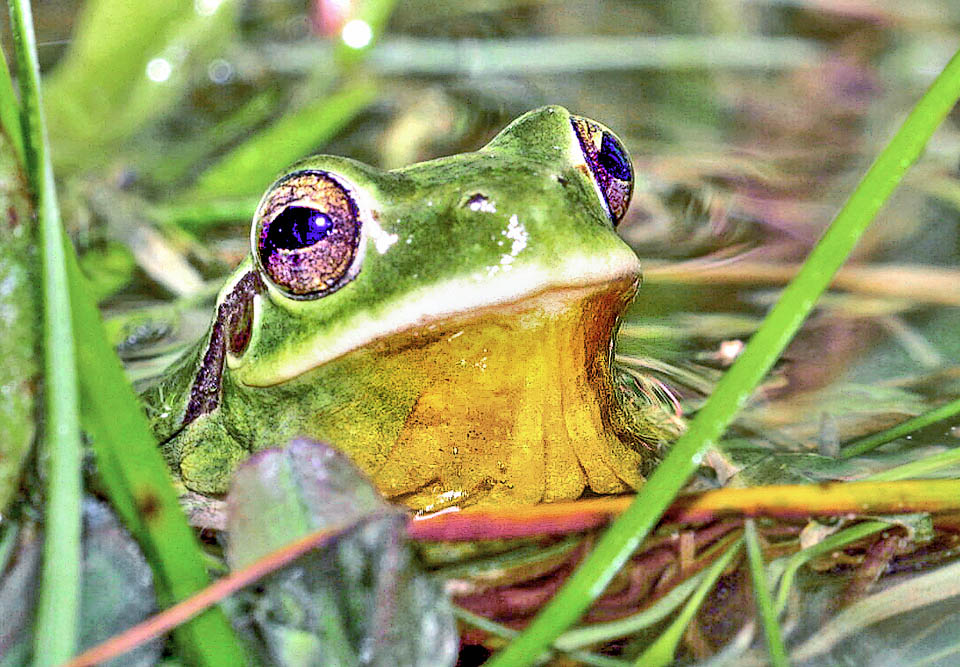
They stand in the chin strap and in this time they can get yellow or orange shades, presenting when at rest clear longitudinal folds © Clément Grayssaguel
Ecology-Habitat
Hyla meridionalis is an essentially thermophilic species and, unlike its close relative Hyla arborea, tends to live in warmer and drier zones and is found more frequently in the coastal regions. It is mainly found at low altitudes, between the level of the sea and 450 m in Portugal and 650 m in France; some populations of altitudes of more than 1000 m are known in North-eastern Spain, in the South of France and in Italy (Piedmont), whilst they reach the altitudinal limit, 2650 m, in the southern part of its distribution area in the High Atlas on Morocco.
The Mediterranean tree frog is found on trees, shrubs, orchards, vineyards and meadows, usually close to freshwater habitats but can get away from water, provided there is sufficient protective vegetation.
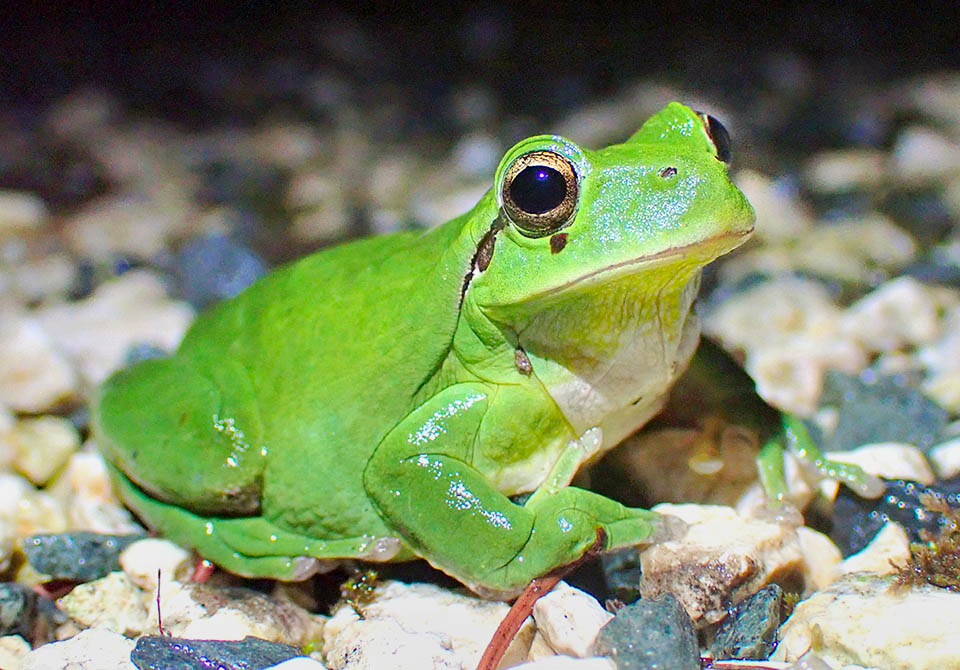
The females, bigger than males, may reach the length of 6,5 cm and have a clear throat without vocal sac © Jordi Soliveres
It reaches high densities in suitable environments, and in the driest parts of its distribution range (North Africa and Iberian Peninsula) its populations are often isolated due to the poor frequency of suitable environments.
The breeding sites are fairly differentiated and their choice depends on the climate, the geomorphology of the soil and on the depth of water (averagely greater than the rest of anurans): ponds, springs, irrigations canals, temporary pools, flooded meadows, lagoons, artificial reservoirs, wells and pools, both in natural agricultural environments and in urban areas.
In southern Europe, however, Hyla meridionalis does not occupy all suitable and available niches, probably due to the competitive interactions established with native species of Hylidae.
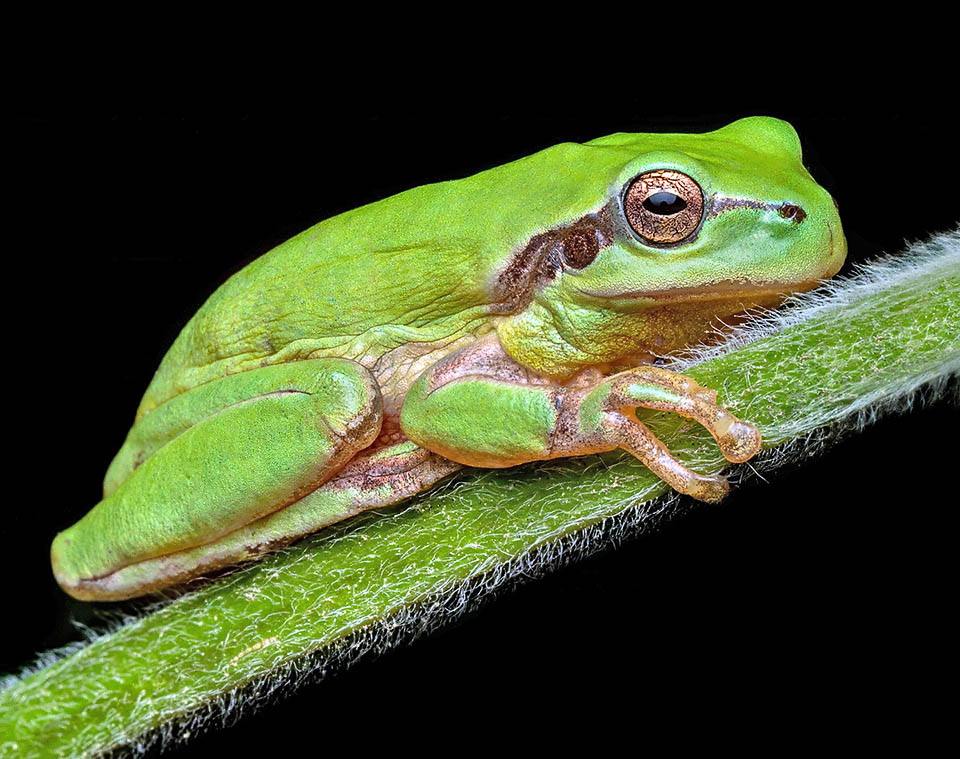
The pupil is horizontal with golden iris. The disc-shaped adhesive pads of the toes are connected to the penultimate phalanx, for an easy grip on various surfaces © Aran Doncel
In some areas of Morocco it is the most common species, and abounds also in areas without a significant tree cover, like the stony plain of Doukkala or on the Middle and High Atlas; conversely, in Liguria is quite abundant in artificial environments located on private lands.
It is an amphibian with predominantly crepuscular and nocturnal habits, though during the mating time it gets more diurnal. Except during the breeding period, when it moves towards the water, it is an arboreal species and quite reserved during the day, staying most of the time on the vegetation and out of water.
In some areas it is sympatric with other species of Hyla with whom it may generate sterile hybrids.
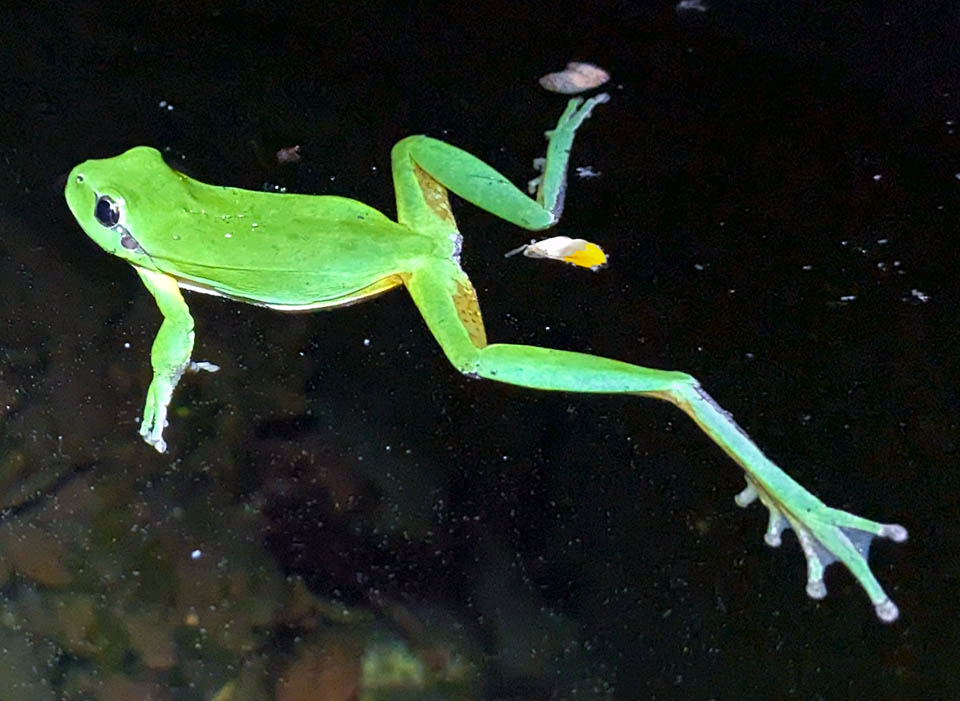
The hind limbs, with vast webbing between toes, have the tibia longer than the femur to escape jumping from predators © arnaudvens
The diet of the Mediterranean tree frog is mainly insectivorous and generalist: orthopterans, hemipterans, beetles, dipterans, hymenopterans, lepidopterans, neuroptera, but also gastropods, chilopods, mites and spiders are captured during the day utilizing a “sit-and-wait” strategy waiting for the preys, whilst during the night it rather favours an active research hunt. The larvae are basically herbivorous. Its predators are the same as the other European amphibians (snakes, birds and small mammals).
Morphophysiology
The Mediterranean tree frog is a medium-sized amphibian, between 3,5 and 5 cm in the adults (up to 6,5 cm in the adult females), with a slightly wider head rather than long.
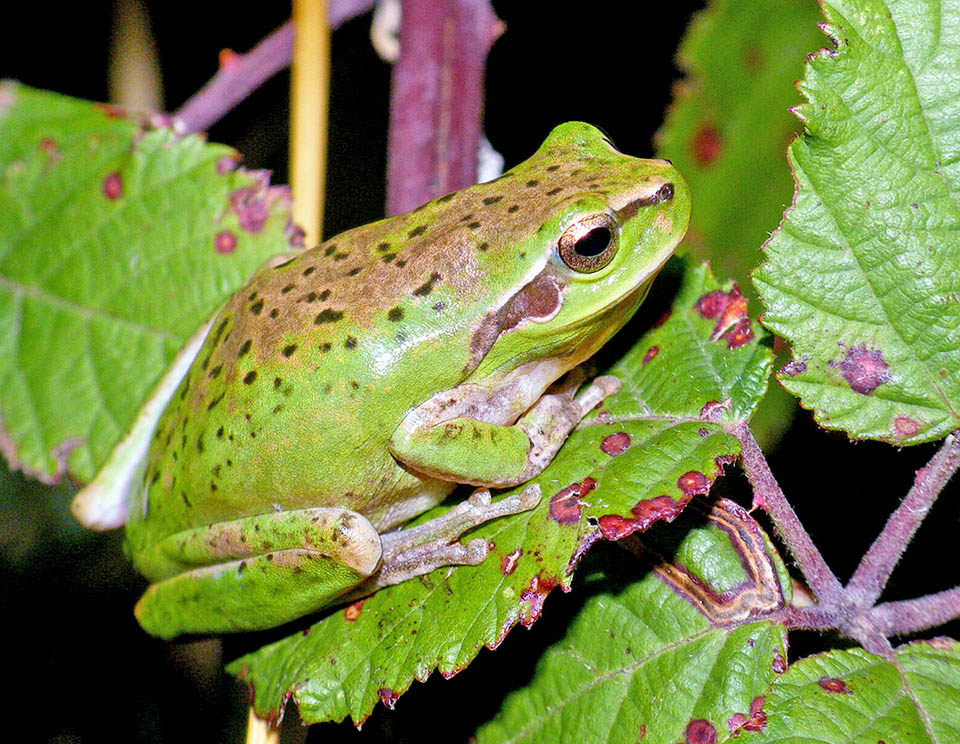
The back skin is smooth, usually bright green, at times with hues grey, yellow or pale brown with or without dark spots © Wouter Beukema
Hyla meridionalise is equipped with a horizontal papilla and golden iris, that give this tree frog a unique look.
The disc-shaped adhesive pads form a fundamental adaptation for its arboreal habits as allow to climb and easily adhere to the surfaces: this disc adheres ventrally to the terminal phalanx, whose dilated extremity is connected through a cartilage with the extremity of the penultimate phalanx, conformation allowing a great mobility to the disc and amplifies its functionality.
The front legs are slender, with the forearm slightly shorter than the arm, and the webbing between the toes is absent; conversely the strong hind limbs are long, with the tibia longer than the femur, and allow it to quickly jump in order to escape predators; the webbing is very extensive until reaching three quarters of the hind limbs toes.
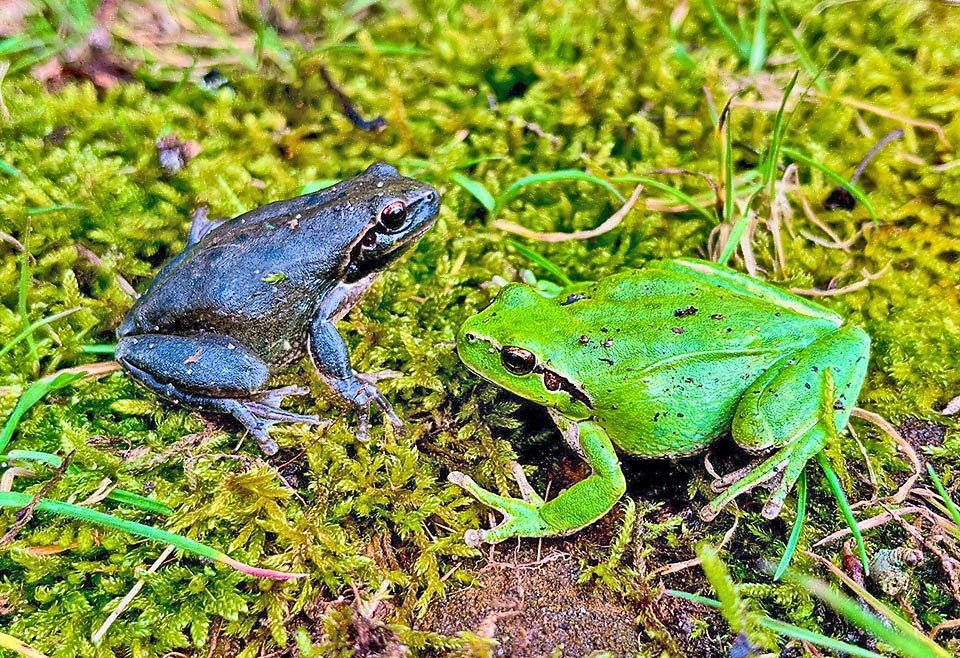
Here is well visible the extreme livery variability. Unlike Hyla arborea, the white-edged dark lateral band crossing the eye stops at the lower limbs © ice33
The skin of the back is smooth and wet, without warts or glandular masses, that helps in holding the humidity in conditions of drought, usually of bright green colour, at times with grey, yellow or clear brown shades with or without dark spots, that may extend to the sides of the throat; It has also been described a cobalt blue colour, caused by absence of the yellow pigments, in Portugal, Spain and in southern France.
A dark side band bordered in white at the top is present in the adults from the nostril to the forelimbs, unlike other European species, Hyla arborea and Hyla intermedia, where such dark band extends laterally to the groin. This justifies the common English name of this species: Stripeless Tree Frog. The ventral skin is uniformly whitish or cream, very grainy on the chest, belly, groin and posterior margin of the thighs.
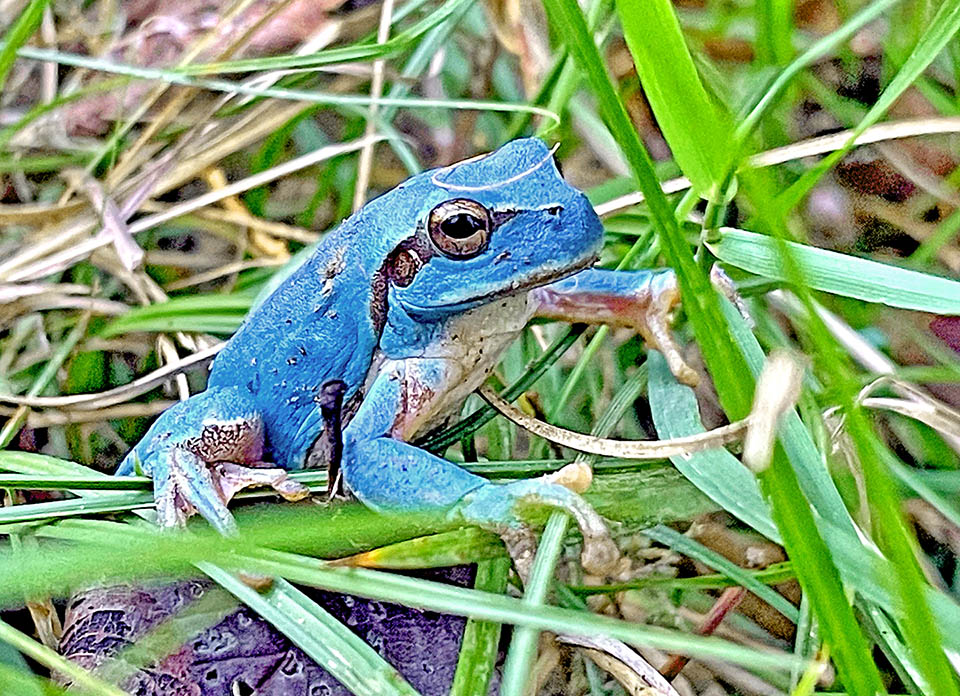
In Portugal, Spain and South France has been also reported an odd cobalt blue colouration, due to the absence of the yellow pigments © Alexandre Amaury
The larvae have a green-yellow metallic colouration, with vast depigmented and semitransparent areas.
The tadpoles of some Spanish populations reach a maximum length of about 40 mm, whilst some larvae of Ligurian populations exceed 43 mm. The compressed morphology, the ample lateral eyes, the high caudal fin and the buccal anteroventral disc explain the nektonic habits of this species, compared to the larvae of other anurans, and the choice of breeding sites with deep waters.
The sexual dimorphism is mainly related to the presence, in the males, of a vocal sac under the throat that, when resting, displays evident longitudinal folds; utilized during the mating calls, the vocal sacs swell and can reach the dimension equal the half the length of snout-cloaca, allowing an effective communication through the thick vegetation.
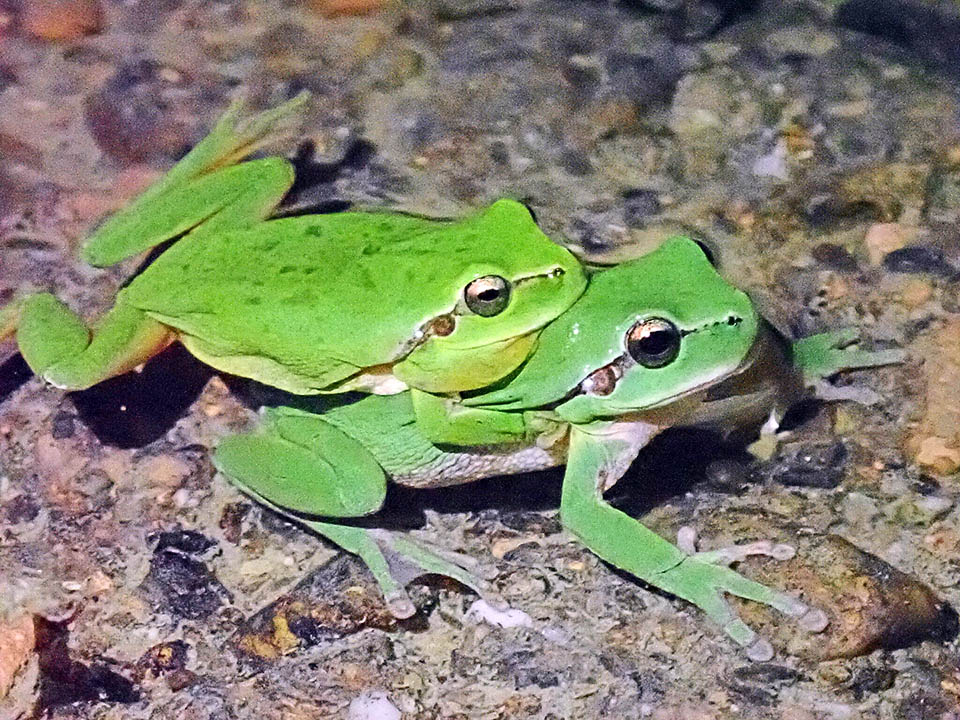
A mating. The male’s embrace is axillary. In the reproductive time a female can lay more than 3000 eggs stuck to the vegetation © thomasrds
The males are smaller than the females, and during the reproductive period their throat region may take on a clear green, yellow or orange colouration.
Ethology-Reproductive Biology
Hyla meridionalis has only one annual reproductive period that usually lasts some months, during which various successive series of larvae may develop.
In arid climates the reproduction begins in winter and ends in May with the desiccation of the reproductive sites, whilst in the temperate climates it begins in spring with metamorphosis done from late summer up to October.
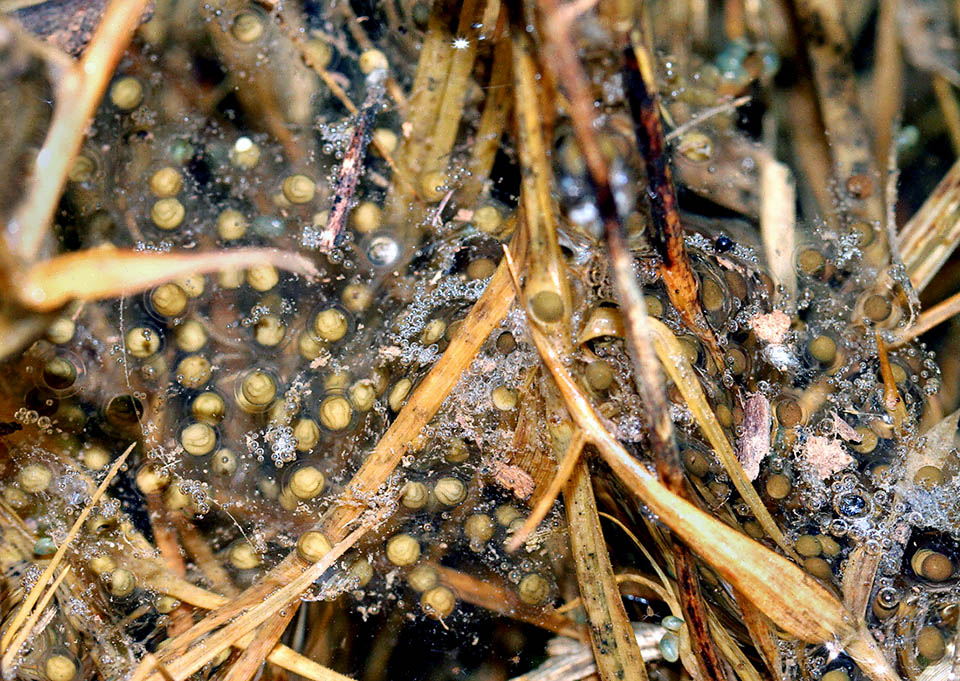
Here we already note the growing embryos. The egg diameter is of 1,1 to 1,5 mm, wrapped by a gelatinous 3-5 mm involucre. The tadpoles are born after 8-10 days © Samuel Guiraudou
Like many other anurans species, the social and reproductive behaviour of the Mediterranean tree frog is mainly based on acoustic communication. At the beginning of the nuptial period the males migrate towards the reproduction sites during the night and emit their vocal calls to attract the receptive females, who, however, get in the sites asynchronously during the season.
The males who participate to the nuptial choirs (or leks, hence lekking behaviour) regulate their presence in the reproductive sites depending on the environmental conditions: the temperature seems to be a key factor determining the beginning and the duration of the calling episodes and of reproductive activity of the anurans, as the warmer days should favour the choral activity, whose beginning would coincide with the achievement of the maximum daily temperature of the water. Moreover, larger aggregations would correspond to a longer nocturnal vocal activity.
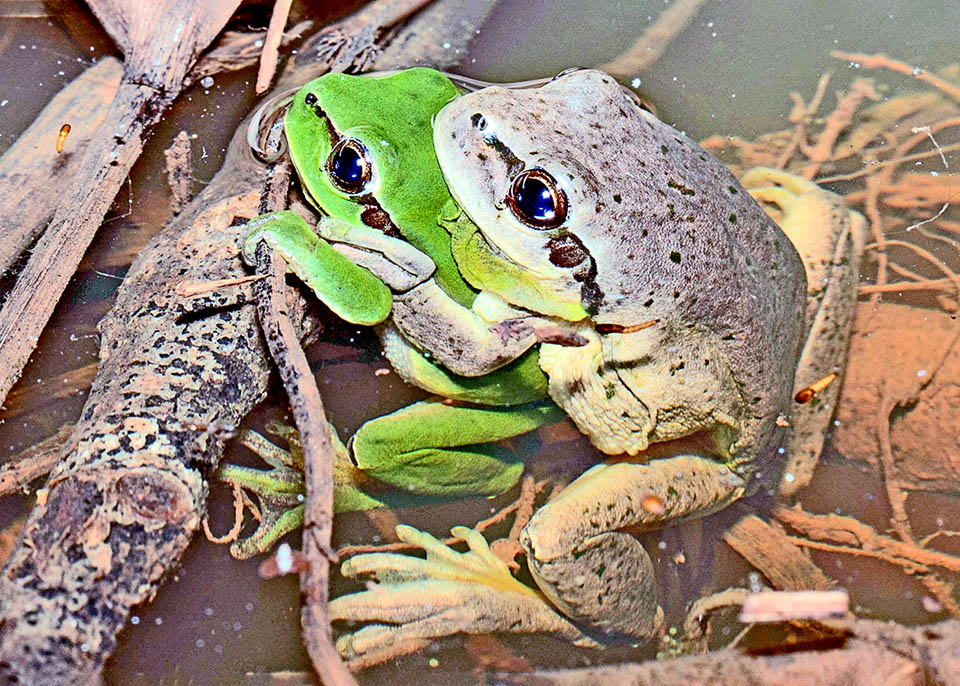
Intercourse, here between Hyla meridionalis of different colour, can last various hours, at times even some days © micah
The males emit their reproductive vocalizations either swimming on the water surface or remaining on the merged vegetation, or on the ground close to the water; these vocal emissions are formed by two dominant frequencies included between 1000-1500 Hz and 2000-3500 Hz respectively, lasting 300-600 ms, at environmental temperatures between 11,9 and 22,5 °C.
Compared to other species of European Hyla, the call is also characterized by a greater number of impulses associated with a greater duration), and is usually lower and deeper, to the point that this species in the past was called Hyla barytonus Heron-Royer, 1884. All these characteristics form a good pre-reproductive barrier with the congeneric Hyla arborea, whilst the interference between the sound emissions of the Mediterranean tree frog with those of Pelodytes punctatus and Epidalea calamita would justify the frequent observation of interspecific intercourses between these species.
In the middle of the reproductive season the song can be heard from miles away.
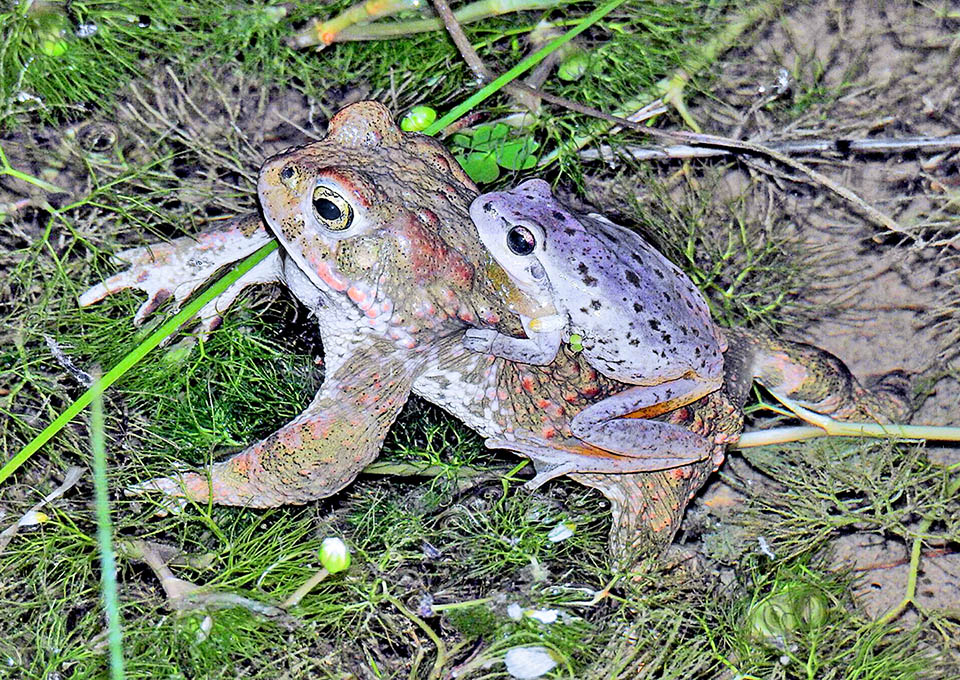
Caught in the frenzy of love it may happen that a male is wrong, and here has seized a female of Epidalea calamita © Yves Bas
The intercourse is axillary and lasts from several hours to some days.
The female preferably looks for accumulations of plants near the shore and begins the deposition; the male in turn begins to inseminate the eggs. The deposition is repeated at various points until the female has no more eggs to expel and the male, in turn, interrupts the insemination. The eggs are laid in small gelatinous masses, usually a few centimetres deep, attached to the aquatic vegetation and containing a variable number of eggs, from few dozens to some hundreds. The females appear to be able to lay more than 3000 eggs per reproductive season. The diametre of the eggs stands between 1,1 and 1,5 mm, wrapped by a gelatinous 3-5 mm involucre. The tadpoles are born after
8-10 days and the metamorphosis takes place after 3-4 months.
Hyla meridionalis is classified “LC, Least Concern” in the IUCN Red List of the endangered species, thanks to its vast distribution, the tolerance to a wide variety of habitats and the presumed ample population.
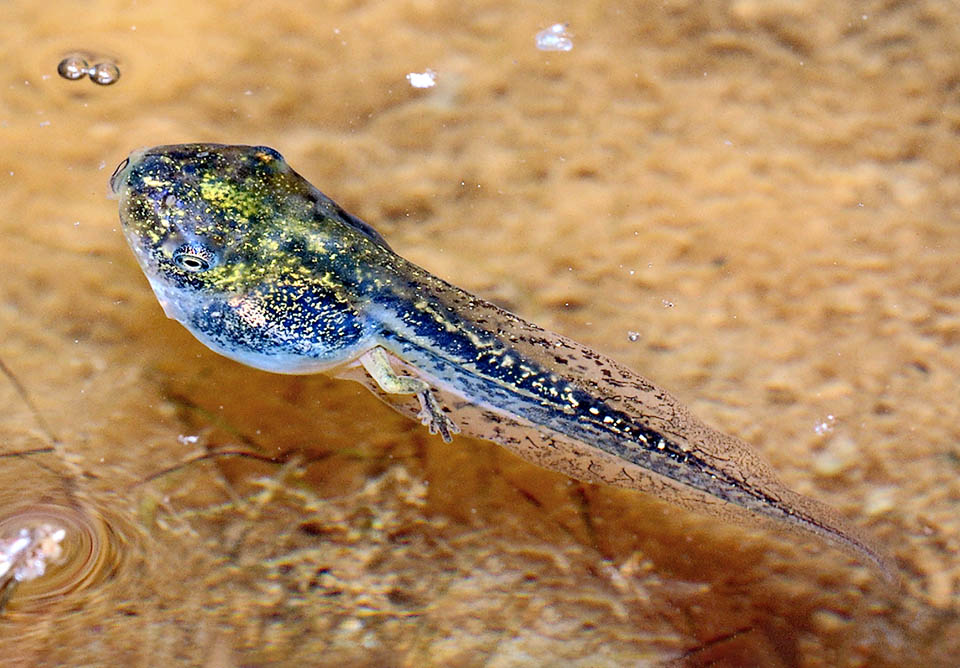
Hyla meridionalis tadpoles about 4 cm long, have big lateral eyes. The high caudal fin and the anteroventral buccal disc indicate a growth in deep waters © simben
The variability of genetic diversity of the populations of the Mediterranean tree frog shows a rich history of evolution of the species and expansion in Africa and Europe, but also a vulnerability to anthropic factors.
In its distribution area Hyla meridionalis seems to maintain a relatively high number of populations also thanks to the capacity to colonize different habitats, not optimal for other anurans species, especially after temporary disturbances such as the fires.
There is no doubt that the Mediterranean tree frog is expanding locally and that it might be favoured by a possible drying up of the climate due to global warming. Its natural high capacity to occupy niches left free by less resilient species continues to be favoured by the human transport and the species can expand in areas that appear theoretically unsuitable to its survival.
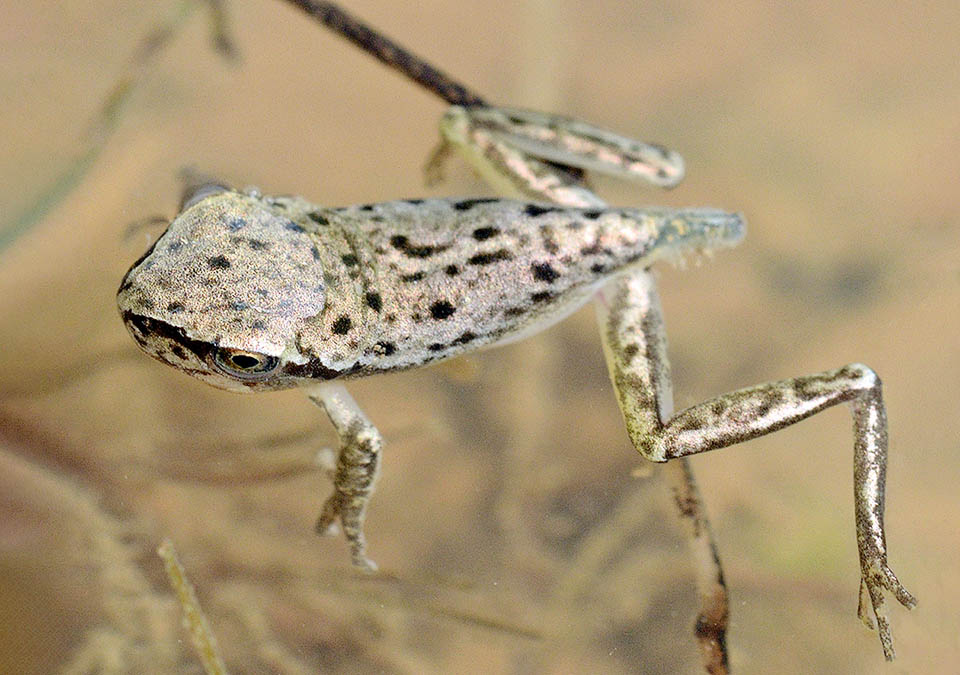
Metamorphosis occurs when 3-4 months old. In arid climates reproduces in winter till May, when reproductive sites dry up. In temperate climates in spring, up to October © simben
Actually, the anthropization of the landscapes could help this species, unlike the local tree frogs that are decreasing in western Europe (for instance, Hyla arborea). In France Hyla meridionalis often reproduces in pioneering and artificial bodies of water where other tree frogs are absent, and tolerates the salinity levels typical of coastal wetlands. In the Canaries, it reaches high densities of population in the banana plantations and may survive in semi-desert areas dapring itself to the brackish waters of the basins formed by small retention dams.
In effect, the itinerant habits of the Mediterranean tree frog still persist today in globalized Europe: the so-called amphibians “hopping from a salad” are frequently imported among the food and horticultural products. Since 2000 have been reported more than 20 findings of frogs in salads or sandwiches in France, Switzerland, Germany, Belgium, Netherlands and United Kingdom, among which Hyla meridionalis has been involved in most of cases (at least 12 out of 21 cases), all imported mainly from France.
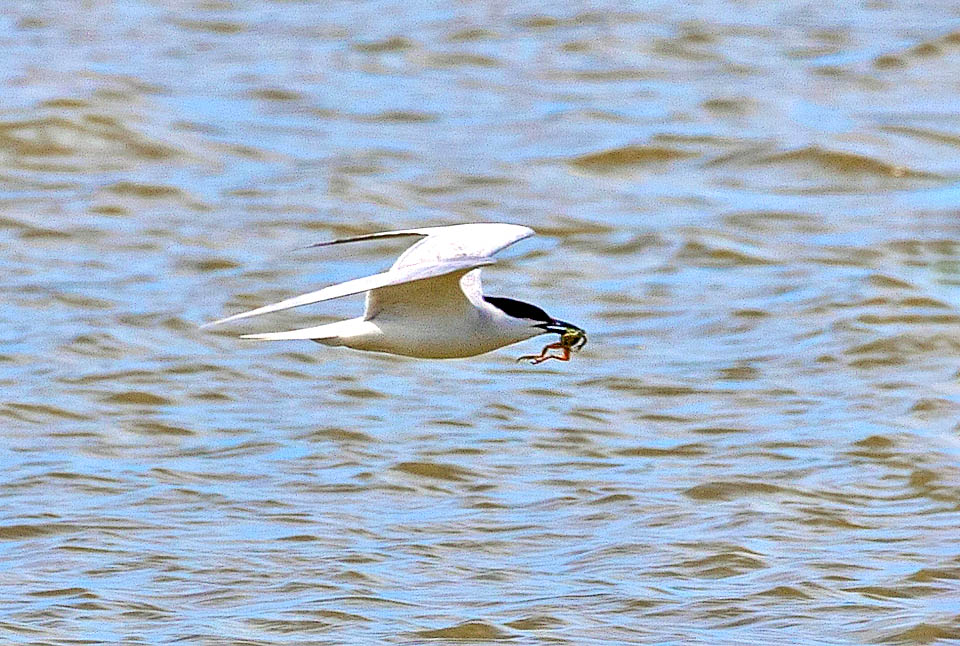
Hyla meridionalis hunts insects, gastropods, chilopods, mites and spiders. Preyed by other amphibians, snakes, small mammals and birds like Gelochelidon nilotica © Thibaud Fournier
In most cases the tree frogs have been conserved in terraria or released in the wild. However, in Spain, the most at risk populations appear to be those of the South-eastern Mediterranean coast and those of the Basque Country, limited to a few ponds in sandy soil. The rapid destruction of the reproductive biotopes, the intensive use of biocides in agriculture, the anti-mosquitos interventions through chemical actions or introduction of fishes in the water collections, the climate change that contributes to the extension of the range of non-native amphibian species affected by pathogens like Batrachochytrium dendrobatidis, the fungus responsible of the devastating chytridiomycosis, could modify the present situation in a short period of time.
Synonyms
Hyla arborea var. meridionlis Boulenger, 1874; Hyla perezii Boscà, 1880; Hyla viridis var. meridionlis Boettger, 1883; Hyla barytonus Heron-Royer, 1884; Hyla arborea var. meridionlis Schreiber, 1912; Hyla africana Ahl, 1924.
→ For general notions about Anura please click here.
→ To appreciate the biodiversity within the FROGS please click here.