
Family : Achatinidae

Text © Dr. Luca Tringali

English translation by Mario Beltramini
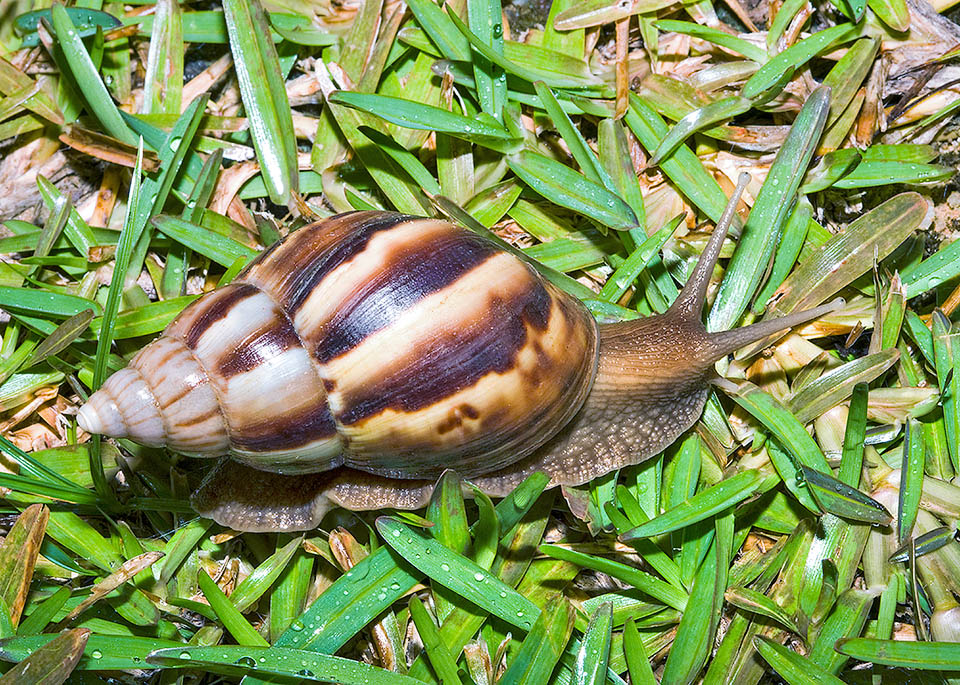
Lissachatina fulica is a land gastropod mollusk native to eastern Africa and now present in more than 50 countries of the world © Dr. Giuseppe Mazza
Lissachatina fulica (Bowdich, 1822), the Giant African land snail, is a terrestrial gastropod native to eastern Afric and is considered as standing among the 100 invasive species more dangerous in the world.
The generic name, that describes some characteristics of the shell, is the result of the union of the Greek terms “λισσό”, lissòs, smooth, and “ἀχάτης”achátēs, agate; the specific epithet comes, most likely, from the Latin “füligo”, soot.
Therefore, the complete name describes the shell of the mollusk as a smooth agate having a dark look.
It belongs to the family Achatinidae Swainson, 1840 that includes at least 107 genera and about 2000 species of dimensions varying from the few millimetres of Allopeas micra (A. d’Orbigny, 1835) to the more than 30 cm of the
Giant tiger land snail Achatina achatina (Linnaeus, 1758).
The genus Lissachatina Bequaert, 1950 includes 15 so far described species.
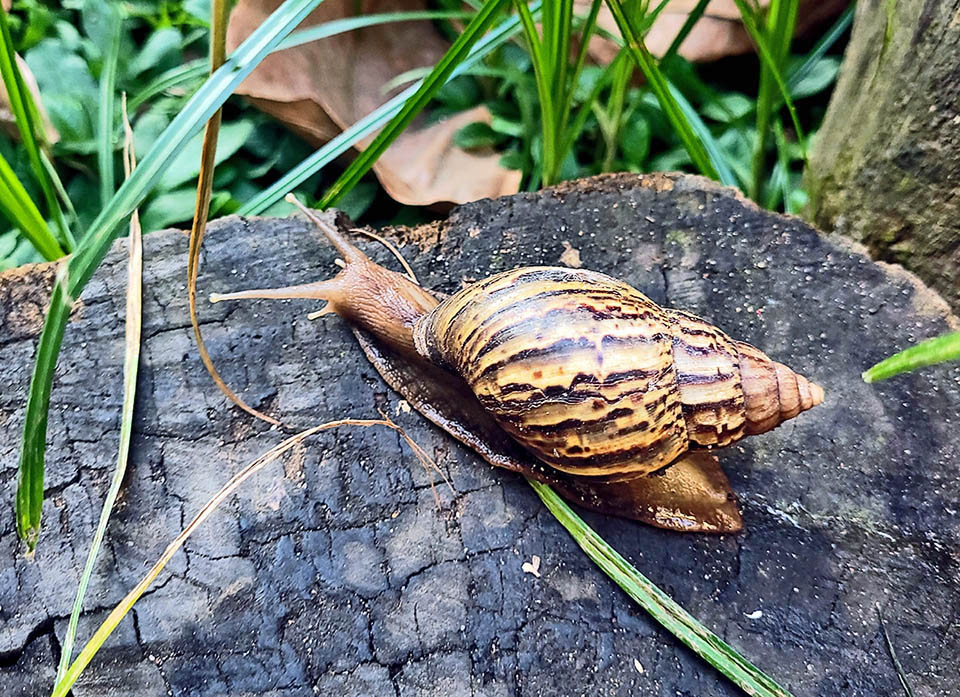
Lives preferably at medium-low altitudes, and its natural habitat is characterized by tropical climate with warm temperatures all the year and high humidity © Milena Costa
The achatinids are oviparous and lay relatively big eggs with hard shells. They can be arboreal, terrestrial or both. They are gastropods mainly herbivorous and detritivorous, feeding on leaves, fruits, vegetables, decaying plants or organic matter; several species have successfully adapted to live in environments modified by the man.
Zoogeography
The achatinids are mollusks of African origin dating back to the Eocene (40,4 Mya) and distributed mainly in the humid tropical zones of western and central Africa, but are present also in Central and South America, Asia and Pacific. The Mediterranean latitudes are reached by peculiar species such as Rumina decollata (Linnaeus, 1758), a molluscivorous achatinid that, during the adult phase, breaks the top part of its shell with a calcareous laminar secretion.
Lissachatina fulica is native to the eastern coast of Africa.
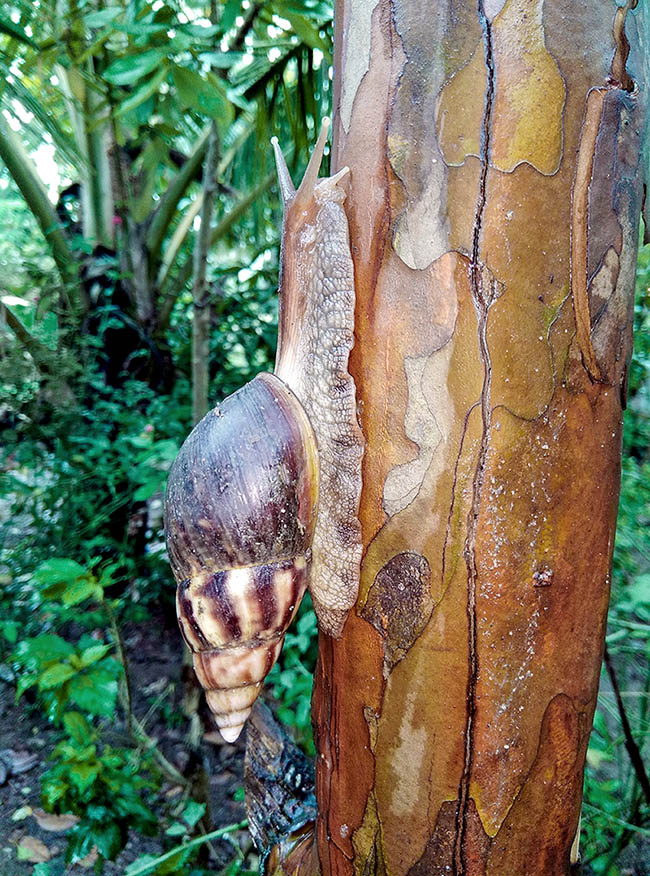
Called Giant African land snail due to its shell that may exceed 20 cm in length, is considered among the 100 invasive species more dangerous on the world as it adapts perfectly to a vast variety of different environments © ranganath nadig
Its natural habitat extends from Natal and Moçambique southwards up to Kenya, to the southern regions of Ethiopia and to Somalia northwards, but has been introduced in many other African countries, as well as in many countries of the world.
The introduction of the Giant African land snail outside its native habitat began at the beginning of 1800, extending to Ethiopia, Somalia, Moçambique and Madagascar.
The first certain documentation of its diffusion in Asia dates back to 1847, when the species was sighted initially in the island of Mauritius to then pass in West Bengal and in India.
Lissachatina fulica is nowadays also present in Ivory Coast and in Morocco and in all Indo-Pacific basin, including French Polynesia, Guam and the Northern Mariana Islands, American Samoa and the Hawaii Islands.
In the New World is present in the Caribbean islands, Costa Rica, all over Brazil and northern Argentina, in Ecuador and Galapagos Islands, in Venezuela and in Colombia.
A population has been discovered in southern Florida in 2010, but presently it appears to have been completely eradicated.
The Giant African land snail, being not a migratory species, has been introduced in countries out of eastern Africa by means of voluntary or unintentional anthropic transport, becoming an aggressive parasitic species in all colonized areas.
To this day it has been sighted in over 50 countries around the world, including some recent reports in Spain, Italy and Slovakia.
Some Authors have described four subspecies, still now under study: Lissachatina fulica castanea (Lamarch, 1822); Lissachatina fulica coloba (Pilsbry, 1904), Lissachatina fulica hamillei (Petit de la Saussaye, 1859); Lissachatina fulica rodatzi (Dunker, 1852).
Ecology-Habitat
Lissachatina fulica is a night mollusk that keeps dormant during the day dug in the ground, but also activates at dusk with overcast sky and warm-humid ground, preferably with humidity over 50%.
It is very sensitive to high evaporation rates: in conditions of water stress, it gets inactive and begins summering within 24 hours.
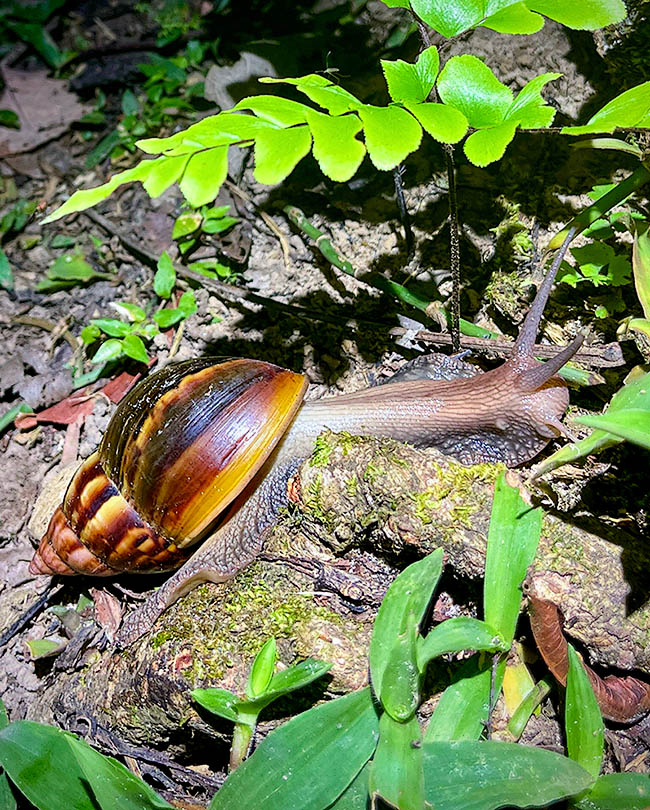
Lissachatina fulica secretes a protective mucus that allows fluid and easy movements also on rough and cutting surfaces, and serves also to seal the opening of the mollusk when this gets inside its shell © Chayant Gonsalves
The natural habitat of the Giant African land snail stands in a tropical climate with warm temperatures all over the year and. high humidity, loves low and medium altitude areas, with temperature between 9 and 29 °C, and is highly adaptable to a vast range of environments as it can modify its vital cycle to adapt to local conditions.
It lives in agricultural areas, coastal zones, humid zones, disturbed areas, forests, urban areas and riparian zones, and needs temperatures over zero and preferably high humidity. It has also adapted to drier and cooler areas, managing to hibernate in soft grounds during the unfavourable weather conditions.
During adverse times Lissachatina fulica buries in 10-15 cm of depth in the soft ground and may stay inactive for 5 to 10 months, losing 60% of its weight. Before and during the inactivity period physiological changes in the blood and in some organs take place.
It prefers environments rich in calcium carbonate, like limestone, marls and urbanized areas with abundance in cement and concrete. The optimal development of this species requires a content in calcium in the substratum of at least 3-4%, and its absence the lack results in slow growth, high mortality, cannibalism and reproductive failure.
It’s one of the major threats for agriculture and for the environment mainly due to ist reproductive capacity and its destructiveness for the plants.
Lissachatina fulica is a generalist species that feeds mainly on vascular plant material. It is known for consuming more than 500 vegetal species, but nourishes also of dead plant material, feces of various animals, including human being, dead mollusks, (flesh and shell) and other dead animals, garbage, including wet cardboard and paper, soil composed of organic decaying material and of chemical elements (Ca, Mg, Mn), and at times alive mollusks.
It has a very developed sense of smell that leads the individuals of this species towards the crops. The diet varies with age, as the juveniles nourish mainly in decaying material and unicellular algae.
Its polyphagous diet is by sure a key factor facilitating the settlement of Lissachatina fulica in various types of. habitat including the urban, agricultural and natural ones in all its invasion areas.
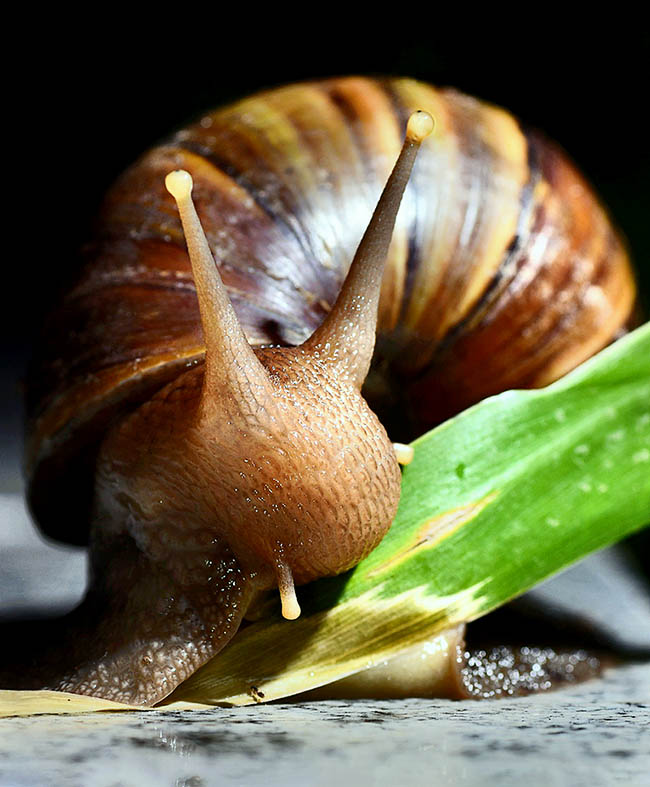
Lissachatina fulica is mainly a voracious herbivore. On top we see two pairs of tentacles: on the shorter ones, below, stands the olfactory organ, whilst the long ones, up, carry the round eyes, extremely sensitive to light © 桃子
The Giant African land snail has a shell that protects it from the adverse environmental conditions and the potential predators among which stand: within the platyhelminths the New Guinea flatworm Platydemus manokwari De Beauchamp, 1963 among the mollusks the Cannibal snail Euglandina rosea (A. Férussac, 1821), among the insects the Tropical fire ant Solenopsis geminata (Fabricius, 1804), within the crustaceans the Christmas Island red crab Gecarcoidea natalis Pocock, 1888, the reptiles the Cloudy snail-eating snake Sibon nebulatus (Linnaeus, 1758, the mammals the rodents of the genus Rattus Fischer, 1803, the Boar in both wild and domestic versions Sus scrofa Linnaeus, 758 and Sus scrofa domesticus Linnaeus, 1758.
The ecological rôle played in the ecosystem by Lissachatina fulica essentially consists in decomposing and consuming the dead vegetation, contributing to the recycling of the nutrients and of the essential building elements for life, and being part of the food chain as source of food for many predators.
Morphophysiology
Lissachatina fulica belongs to the superorder of the gastropods Eupulmonata, that includes most of the terrestrial mollusks, many of freshwater and some small marine marine families and of brackish waters, for a total of 250000-300000 species.
Like all members of the superorder the Giant African land snail shares one of their characteristic morpho-physiological characters: the presence of a cavity in the mantle that works as a lung, open by means of a pneumostome and with well developed blood vessels.
The adult animal can be about 7 cm tall and can be 20 cm or more, but there is however a form affected by dwarfism, with adult specimens only 35 mm long. Recent studies hypothesize that the environmental variables may influence the length of the shell and the total weight. Its shell is conical and is formed by seven to twelve whorls, with height double compared to the width, and colour variable depending on the diet: brown-dark with dark streaks crossing the whorls, or brown-reddish with pale yellow vertical dots.
The overall look varies remarkably also inside the same colony, from very slender to moderately obese. The fleshy part has a pale yellow colour, the head has two rows of tentacles, one of which is longer than the other. On the shorter tentacles stands the olfactory organ, that is utilized for smelling and touching the surrounding environment, whilst the round eyes, extremely sensitive to the light, are placed on the longest ones.
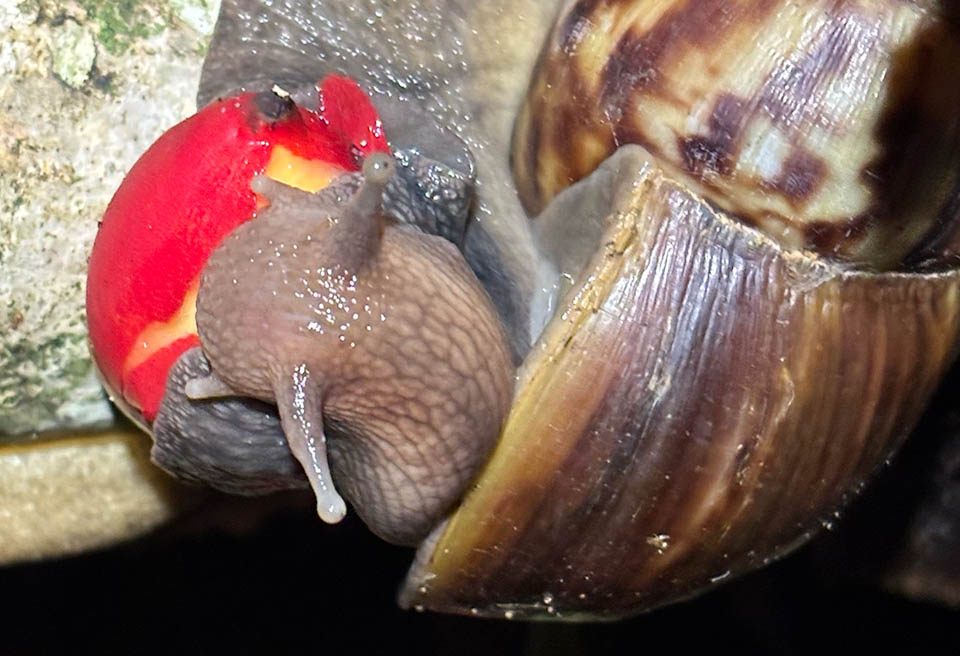
Here nibbling on a fruit. Lissachatina fulica feeds on many different vegetal species, both food and ornamental, causing extensive damage to the crops © Gabriel
The combination of smell and sight is the way with which this species perceives the surrounding environment, and allows the animal to locate food, sexual partners and potential threats. The buccal apparatus has a radule containing about 80.000 teeth. An adult weighs averagely 200-600 g, moves at a speed of 0,003 km/h and secretes a protective substance similar to a slime that allows fluid and easy movements even on rough and sharp surfaces. As protection, withdraws the body into the shell and can seal the opening with a mucus that, when in contact with the air, dries up creating a protecting layer, the epiphragm.
Ethology-Reproductive Biology
Lissachatina fulica is a hermaphroditic mollusk, having male reproductive organs as well as female able to produce sperm and eggs. Particularly, this mollusk goes through two reproductive stages: the individuals under 50 mm of length produce only spermatozoa, whilst the transition to the hermaphroditic stage, with the acquisition of the female reproductive organs, occurs in the individuals over this size.
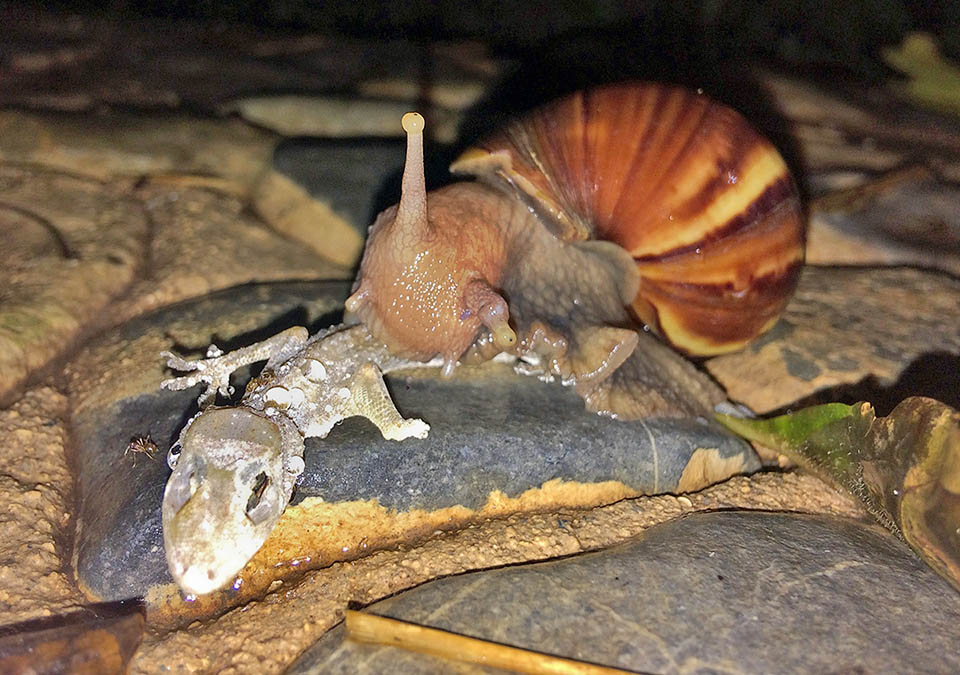
Here devours a gecko corpse. An alternative source of food, with animal feces, alive or dead mollusks, garbage and decaying organic material © Bhrenno Trad
Even if capable of self-fertilizing, the reproduction occurs preferably between two partners. This cross-fertilization, moreover, is not casual but happens only between two big individuals, sexually mature and mutually receptive.
These mollusks typically carry on a solitary life, but the mating period, when courting and interactions with other individuals play an essential rôle in their lives. Even if Lissachatina fulica can choose the partner based on size, the reproductive stage is a priority feature as this gastropod prefers mating with the more mature individuals.
The Giant African land snails communicate through vibrations and smells, and the courting may last up to thirty minutes, during which the two individuals lift the foot from the ground and bring it into contact with each other, and rub vigorously the enormously extended tentacles, rocking the body back and forth. The two gastropods approach laterally while mating so that their genital openings are opposite.
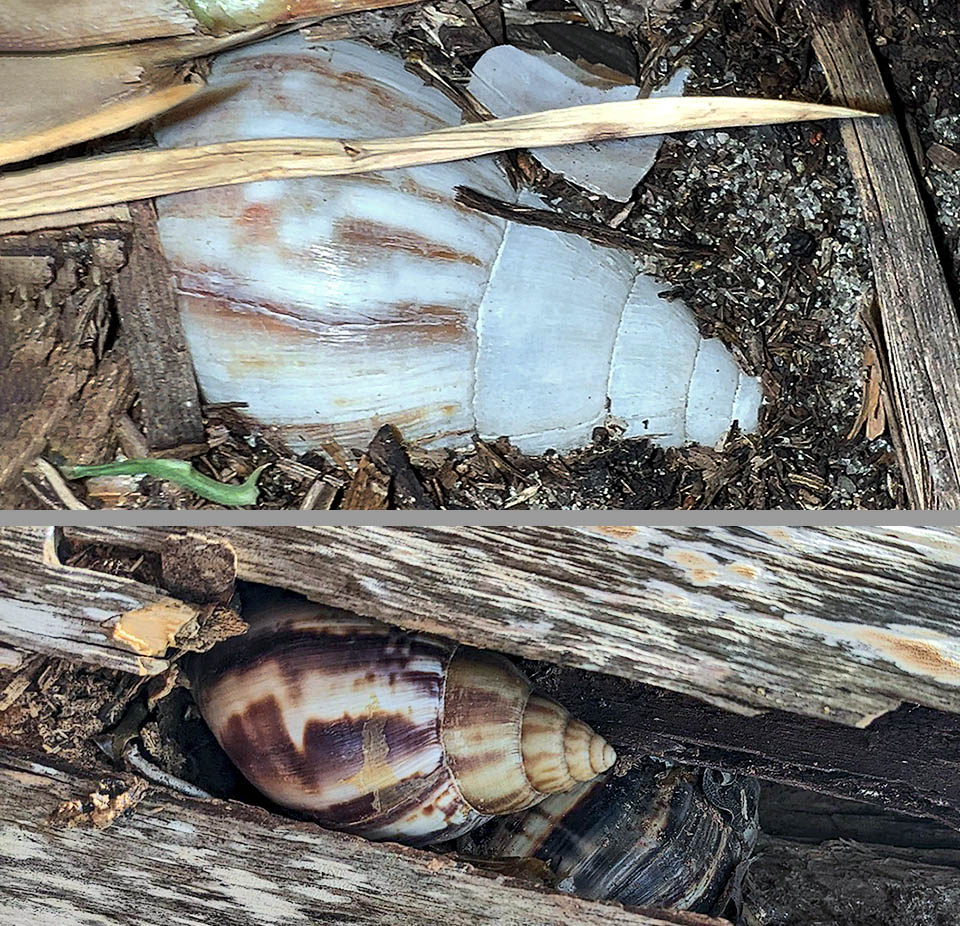
When inactive it shelters in various environments, like soft ground or under trees bark © Vincent Mia Edie Verheyen (above) and © Sophie Bland (below)
During this phase exists the possibility that the gametes are transferred to each other simultaneously, through the copulatory organ that emerges through the genital opening and that is pushed into the vagina of the other individual , and vice versa.
However, this happens only if both individuals are about the same size. Otherwise the bigger snail acts as female and the gametes are transferred from the smaller snail to the bigger one, mating unilaterally. The sperm is utilized to fecundate the eggs, but may be stored inside the body for up to two years.
The fecundated eggs of Lissachatina fulica, laid between eight and twenty days after mating, are hidden in a nest in the ground or among rocks and leaves.
The number of eggs laid by one single mollusk depends on the age and varies from 100 to 500 eggs that hatch at the same time at temperatures over the 15 °C after eleven-fifteen days, giving birth to small snails that reach the adult age in about six months.
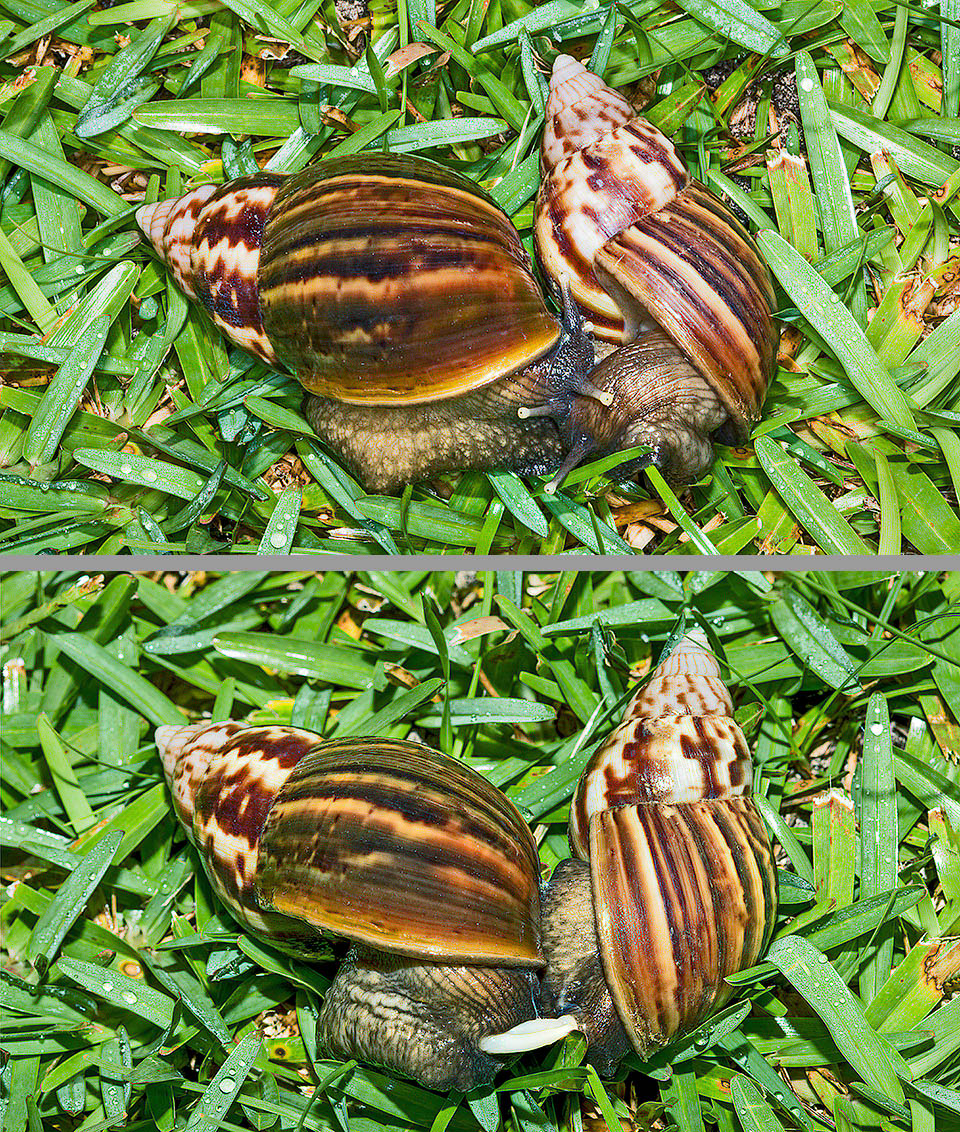
The Giant African land snail is a hermaphrodite mollusk having male and female reproductive organs and is therefore able to produce sperm and eggs. The courting, visible in the photo above, may last even 30 minutes. Then the two partners transfer each other the spermatozoa through their own copulatory organs © Dr. Giuseppe Mazza
The juveniles pass through four stages of development, recognizable by the number of whorls of the shell, from one to four whorls; the adults normally have 5-7 of them. The Giant African land snail is capable of producing new broods every two or three months. The parental cares do not exist, the young are autonomous since the moment of the hatching, and may live averagely three-five years, with longevity peaks of ten years.
At present, Lissachatina fulica is neither vulnerable nor threatened, reason why it has not been inserted in the IUCN Red List of the endangered species but on the contrary, due to the economic, ecologic and medical implications that its presence implies, has been recognized among the 100 worst invasive alien species and included in the Global Invasive Species Database. Utilized by some cultures as food, this species has been exported in many countries outside its own original range of distribution to be utilized as an alternative source of protein, causing more harm than good.
Being a macro phytophagous herbivore with a voracious appetite, Lissachatina fulica can damage various plant species, both food and ornamental, as it has a very varied diet.
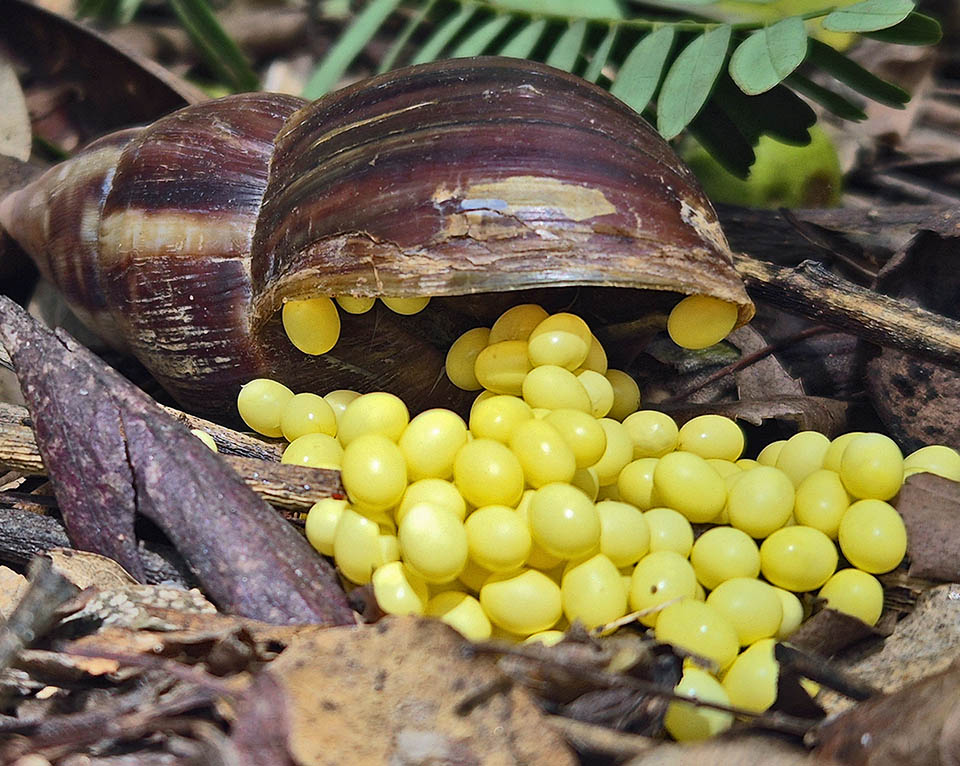
8-20 days after mating, 100 to 500 fecundated eggs are laid in the ground or among rocks and leaves © Vijayalakshmi
It prefers to feed on plants at the stage of seedling and the damages done, varying from the defoliation to the damage of stems, fruits and flowers, can be so serious as to oblige the farmers to replace the cultivated species.
Among its primary sources of food stand the Breadfruit Artocarpus altilis (Parkinson ex F.A.Zorn) Fosberg (1941), the Lesser bougainvillea Bougainvillea glabra Choisy (1849), the Papaya Carica papaya Linnaeus, 1753), the Arabica coffee Coffea arabica Linnaeus (1753), the Manioc Manihot esculenta Crantz (1766), the Black pepper Piper nigrum Linnaeus (1753), or the Cocoa tree Theobroma cacao Linnaeus (1753).
But the main known ecological impacts of Lissachatina fulica are associated with the human responses to its invasion. It’s emblematic the case of the eradication attempt of this species of French Polynesia. Introduced in Tahiti for food purposes in 1967, it spread rapidly in the other islands of the group of the Society revealing itself immediately a serious problem for the cultivations of these environments already so little rich under the agri-food profile.
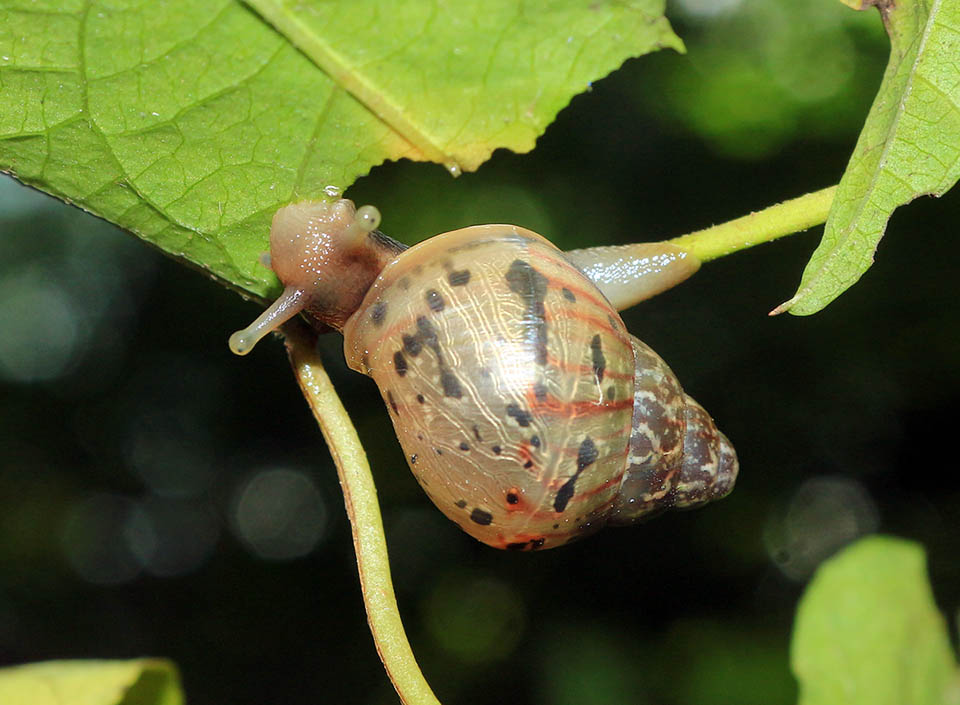
The juveniles mainly feed on unicellular algae and decaying material, but they do not disdain tender leaves to nibble © 沈冠宇(Kuan-yu Shen)
The following introduction of the carnivorous mollusk Rosy wolfsnail Euglandina rosea (Férussac, 1821) for the biological control of the now very numerous populations of the Giant African land snail, despite the total absence of proof that Euglandina rosea would be effective in this sense resulted in the extinction of about 50 species of endemic terrestrial mollusks, essentially arboreal, of the family Partulidae.
It is necessary to remind, moreover, that Lissachatina fulica is also a vector of numerous pathogens human, vegetal and animal among which the Rat lungworm Angiostrongylus cantonensis (Chen, 1935) that causes the angiostrongyliasis, the most common cause of eosinophilic meningitis in humans.
The vital cycle of this nematode that resides mainly in the pulmonary arteries of the rats, amply diffused in the Asian-Pacific region, involves intermediate guests such as the Giant African land snail, that gets infected by consuming rat feces containing larvae of the parasite. Human beings inadvertently become guests when they consume these infected mollusks raw or undercooked.
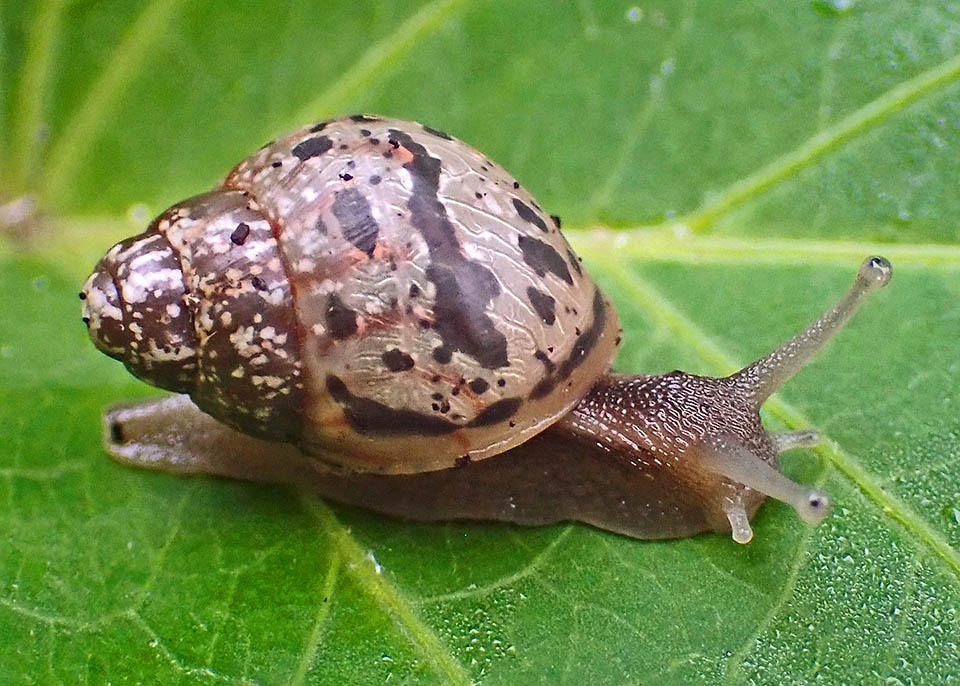
Juveniles can reproduce when they are 6 months old, after four development stages. They are recognized by the number of shell whorls: 1 to 4, whilst in adults are 5 to 7 © Thomas Irvine
Concluding, Lissachatina fulica has been able to colonize the world thanks to its biological and ecological characteristics: rapid growth of population, possibility of self-fecundation, sexual maturity at 6 months of age, capacity of spawning 500 eggs several times a year, polyphagia, drought resistance, adaptability to natural or anthropized environments.
The increase in knowledge about this mollusk and its effective management through chemical methods, biological and environmentally friendly, appears fundamental not only for safeguarding food safety and minimizing economic losses, but also for protecting the public health of many countries and preserving the agricultural productivity and the local ecosystems.
Synonyms
Achatina fulica Bowdich, 1822; Achatina acuta Lamarck, 1822; Achatina mauritiana Lamarck, 1822; Achatina couroupa R. P. Lesson, 1830; Achatina fasciata Deshayes, 1831; Achatina zebra var. macrostoma H. Beck, 1837; Achatina rediviva Mabille, 1901.
→ To appreciate the biodiversity within the MOLLUSK please click here.